
Actinic Keratosis (Solar Keratosis) is a common premalignant skin condition characterized by thick, scaly, or crusty patches that arise in areas exposed to ultraviolet (UV) radiation. It is also known as solar keratosis and, in older terminology, senile keratosis. The underlying cause is cumulative UV damage to skin cells, particularly in people with long-term sun exposure or history of intense intermittent sunburns. Risk is higher in fair-skinned individuals, those with light hair and eye color, people who live in sunny climates or at higher altitudes, and those who have occupations or lifestyles that increase time outdoors. Immunosuppression can also increase susceptibility, and actinic keratoses often occur alongside other signs of chronic photoaging such as uneven pigmentation and skin thinning. Actinic keratosis typically presents as rough, dry, sandpaper-like skin or as small plaques that may be skin-colored, pink, red, or brown. Lesions can be flat or slightly raised and may develop scale, crust, or tenderness, and some people notice a persistent area that feels different from surrounding skin. The size is often small, but multiple lesions may appear over time in the same sun-exposed region, reflecting a field of damaged skin rather than a single isolated spot. In some cases, the surface may become more inflamed or ulcerated, which can signal progression toward invasive disease. Because symptoms can be subtle, the condition is frequently identified during skin examinations, especially in older adults with significant lifetime sun exposure. Actinic keratosis has been recognized for decades as a marker of chronic UV injury and as a precursor to a subset of squamous cell carcinomas. The term “actinic” refers to the effect of light, particularly UV radiation, on living tissue, while “solar keratosis” emphasizes the sun-related origin. Epidemiologically, it is more prevalent in regions with higher UV exposure and among populations with greater skin sensitivity to sunlight. Historically, the condition was sometimes grouped under broader categories of “senile” or “premalignant” skin changes, but modern dermatology distinguishes actinic keratosis as a specific premalignant entity. Medical literature has long emphasized that not all lesions progress, yet a proportion can evolve into squamous cell carcinoma, which is why it is considered clinically important. Artist: James Heilman, MD. Credit: Own work. License: CC BY-SA 4.0. Source: Wikimedia Commons file page . Note: This description was generated by AI and may contain inaccurate information.
Note: This description was generated by AI and may contain inaccurate information.
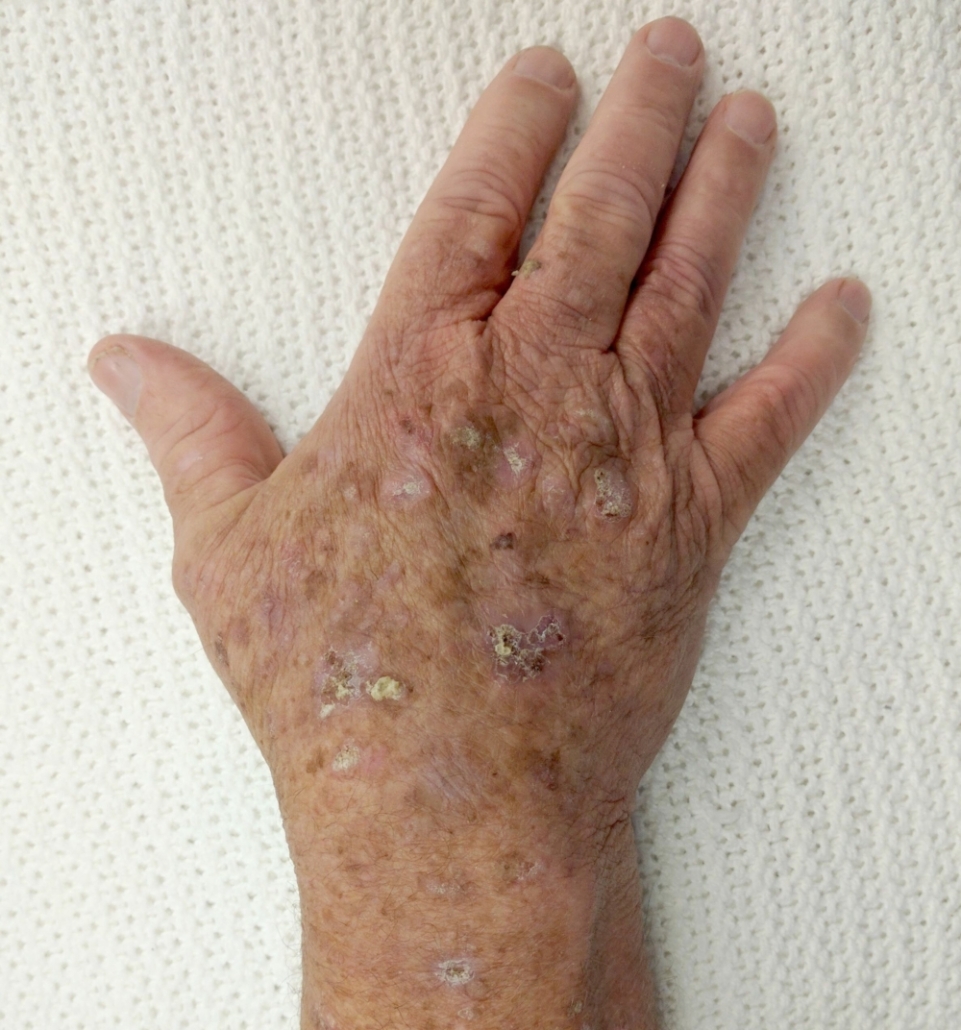
Original Image Producer: James Heilman, MD. Credit: Own work. License: CC BY-SA 4.0. Link to Source: https://commons.wikimedia.org/wiki/File:SolarAcanthosis.jpg .
| ID | Title |
|---|---|
| 201540 | Rash and Skin Keratosis Appearing to Fade |
| 201825 | Works on skin cancer |
| 200527 | Pre-stage Skin Cancer gone ! |
| 200421 | Brain tumor – healing fast |
| 103573 | Spots shrinking with non-diluted CDS use |