
Actinic Keratosis (Solar Keratosis) is a common premalignant skin condition characterized by thick, scaly, or crusty patches that arise in areas exposed to ultraviolet (UV) radiation. It is also known as solar keratosis and, in older terminology, senile keratosis. The underlying cause is cumulative UV damage to skin cells, particularly in people with long-term sun exposure or history of intense intermittent sunburns. Risk is higher in fair-skinned individuals, those with light hair and eye color, people who live in sunny climates or at higher altitudes, and those who have occupations or lifestyles that increase time outdoors. Immunosuppression can also increase susceptibility, and actinic keratoses often occur alongside other signs of chronic photoaging such as uneven pigmentation and skin thinning. Actinic keratosis typically presents as rough, dry, sandpaper-like skin or as small plaques that may be skin-colored, pink, red, or brown. Lesions can be flat or slightly raised and may develop scale, crust, or tenderness, and some people notice a persistent area that feels different from surrounding skin. The size is often small, but multiple lesions may appear over time in the same sun-exposed region, reflecting a field of damaged skin rather than a single isolated spot. In some cases, the surface may become more inflamed or ulcerated, which can signal progression toward invasive disease. Because symptoms can be subtle, the condition is frequently identified during skin examinations, especially in older adults with significant lifetime sun exposure. Actinic keratosis has been recognized for decades as a marker of chronic UV injury and as a precursor to a subset of squamous cell carcinomas. The term “actinic” refers to the effect of light, particularly UV radiation, on living tissue, while “solar keratosis” emphasizes the sun-related origin. Epidemiologically, it is more prevalent in regions with higher UV exposure and among populations with greater skin sensitivity to sunlight. Historically, the condition was sometimes grouped under broader categories of “senile” or “premalignant” skin changes, but modern dermatology distinguishes actinic keratosis as a specific premalignant entity. Medical literature has long emphasized that not all lesions progress, yet a proportion can evolve into squamous cell carcinoma, which is why it is considered clinically important. Artist: James Heilman, MD. Credit: Own work. License: CC BY-SA 4.0. Source: Wikimedia Commons file page . Note: This description was generated by AI and may contain inaccurate information.
Note: This description was generated by AI and may contain inaccurate information.
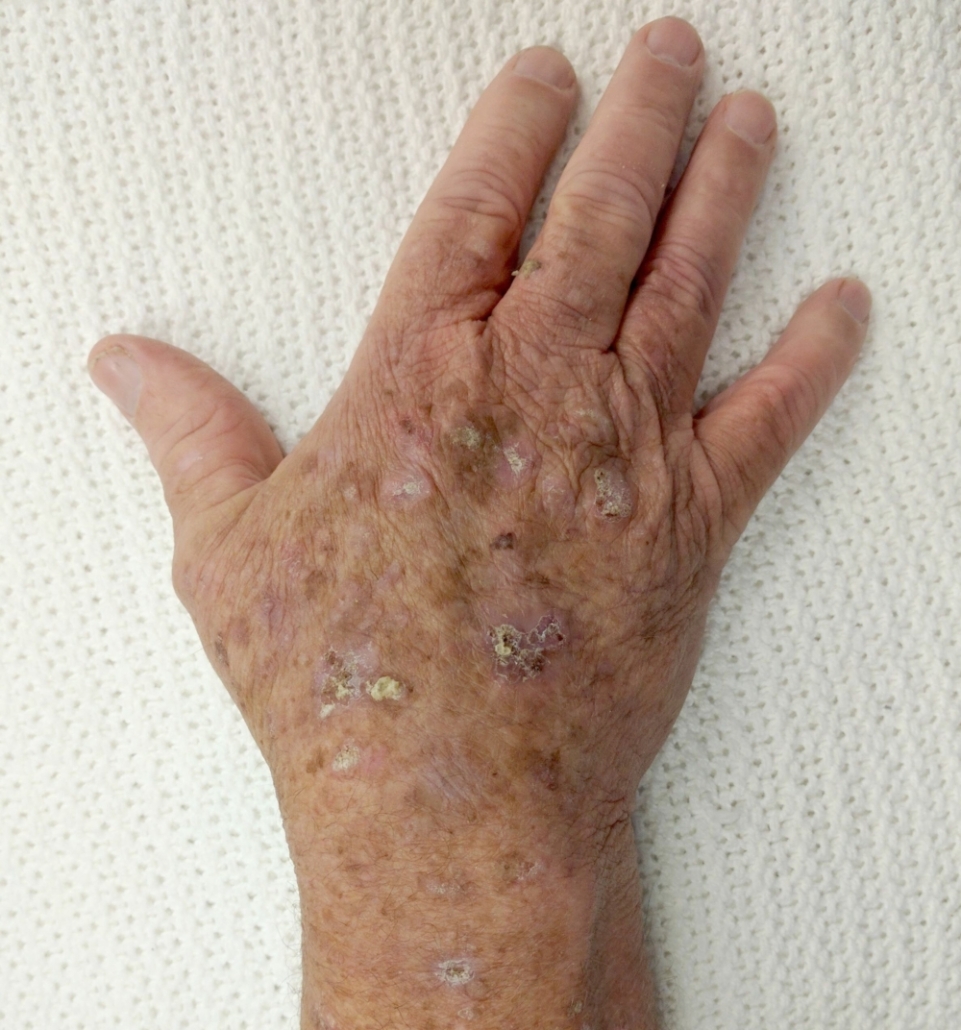
Original Image Producer: James Heilman, MD. Credit: Own work. License: CC BY-SA 4.0. Link to Source: https://commons.wikimedia.org/wiki/File:SolarAcanthosis.jpg .
Rash and Skin Keratosis Appearing to Fade
I had a combination rash and solar keratosis on my abdomen that seems to be vanishing.
It could be that sitting in the sun or ingesting MMS or a combination of them is making it go away.
On the other hand, I also have a mild jock itch that seems to be vanishing as well. It occurs when it is hot and moist, mostly when I sleep.
I’m happy to see these things go away, for whatever reason.
Maybe consider some extra vitamin D in your supplements. Vitamin D also helps to block histamines. I have some vitamin D cream that I use for any kind of itch. It totally works for stopping the itch within minutes.
Regarding the paradophilus, I see that it is not a probiotic as I thought. It is a byproduct of probiotics. It is a unique product. It kills the same stuff that MMS does.
I can only find info at sites that sell the stuff.
Works on skin cancer
I’ve been applying the MMS directly on my occasional small (less than 1 inch dia). skin cancer tumors of the basil or Kerotosis type and it kills the cancer cells and the tumors slowly disappear in about a week or two. Using Noxema to help clear away the dead cells helps for faster healing. It has not stopped them from forming but I can get rid of them as they pop up. Have not taken internally. I have killed about 20 tumors so far. If I did not have this, I would be covered with crusty skin cancer spots.
It also works on warts. Takes while but it does work.
Pre-stage Skin Cancer gone !
Diagnose and Treatment from a Dermatologist:
Quiste milium, seborrhoic Eczema, actinic Keratoderma.
Light Keratoderma in Face and back of the hand
Light scaling bump / squamous cell carcinoma (pre-stage skin cancer)
‘After ive been in treatment with my longtime family doctor and internist after summer 2007 due to the strong itching Stains-appearances on my left upper-cheek of my face, i have consulted a local Dermatologist who made the diagnosis of Seborrhoic Eczema (actinic Keratoderma). The dermatologist started to treat me with “Diprogenta” which after approximatly four weeks did not show any effect. Furthermore he prescribed a so called “Aldara crema 5% env. Con 12 sobres”. The Effect was slightly helpful as the itching decreased, but the area of the eczema / actinic Keratoderma was getting bigger and in Spring 2008 had a area of a 10 cent Euro Coin with a elevation of about 1.5 millimeters.
The Dermatologist explained that in the case of a unefficient Help through the prescribed Medications, a operation must be carried through unconditionally as it would be about Pre-stage skin cancer.
In summer 2008 i got to know about MMS from Jim Humble. In autumn 2008 I have been studying the application all about this Mineral substance so far, that I started with the following treatment myself on that area of skin. 50 drops Citric Acid with 10% Concentration plus 10 drops Sodium Clorite with 25% concentration, 3 minutes waiting time, swirl slightly, every morning prepared after breakfast without additional dilution and about 5 to 7 times out of the plain bowl, strongly rubbed on with the finger on the area of skin. Daily Repeat, over four to six weeks.
The seborrhoic Eczema got smaller and more plain and has since than untill today October 2011 disapeared!’
19.10.2011
Tobias Laube writting for H.J. Laube
Brain tumor - healing fast
I have been using MMS with DMSO for four weeks know. I am taking it for a brain tumour. I have loves lump on my arm that was going to be cut out s disappear completely. Age spots on my legs and hands have disappeared as well as some very Suss and itchy blotches that I had not taken to the doctor
Spots shrinking with non-diluted CDS use
I am also applying non-diluted CDS to some “spots” on myself and they are also getting smaller.
Will see what happens in a few days.
–Charlotte