
Pearl the Cats’ Successful Treatment Using Chlorine Dioxide (MMS)
This is the third report in a growing series of cases successfully treated with chlorine dioxide therapy. The first two were of my own personal illnesses (infectious colitis and paronychial abscess), and this third one is of… a cat named Pearl.
The following case report is co-authored by me and my patient, who has requested anonymity (I will refer to her as Laura).
In a recent follow-up visit with Laura, whom I treat for the prevention of recurrence of breast cancer (which she has had 4 separate times), one of the many topics we covered was her glowing update on the condition of her cat Pearl. Meet Pearl:

My History With Pearl: In a prior visit a few months ago, Laura was beset with anxiety and distress over Pearl, an Abyssinian cat that she had recently acquired from a breeder, but who was not thriving. Actually, that is an understatement because Laura reported that Pearl had constant diarrhea, frequent vomiting, troubled breathing, and made wheezing and whistling sounds. She couldn’t even jump on a chair from the floor.
After we had settled on the adjustments to Laura’s treatment plan, I started to think about Pearl and how I could help her. I included a list of educational resources that I thought might be both relevant and impactful in treating Pearl’s mystery illness, as well as a vet who I thought might be willing to provide such expert guidance and care (I learned later that wasn’t true).
Disclaimer: I am not a vet, and it is illegal to practice veterinary medicine as a medical doctor, so know that, beyond the suggestions above, I did not participate in Pearl’s care at all. Problem (or not): Laura and her husband took it upon themselves to self-treat Pearl, based on my “suggestions.”
Fun Fact: I was out to dinner with my daughters and ex-wife a few weeks ago, and I told them the story of Pearl, explaining how, based solely on my providing them with educational resources, Laura and her husband were able to recover her cat.
When I told my ex-wife that I had included the suggestions as an “addendum” to Laura’s visit note in my clinic’s Electronic Medical Record, she burst out laughing uncontrollably. “What? You wrote suggestions for her cat in the medical record? How can you do that?” Note that my ex-wife is also a pulmonary and critical care specialist, working at a major academic medical center. I gathered from her comment that it is still a place where doctors do not offer educational resources to potentially help preserve the health of dying cats when the cat’s illness is the proximate cause of their patients’ severe anxiety.
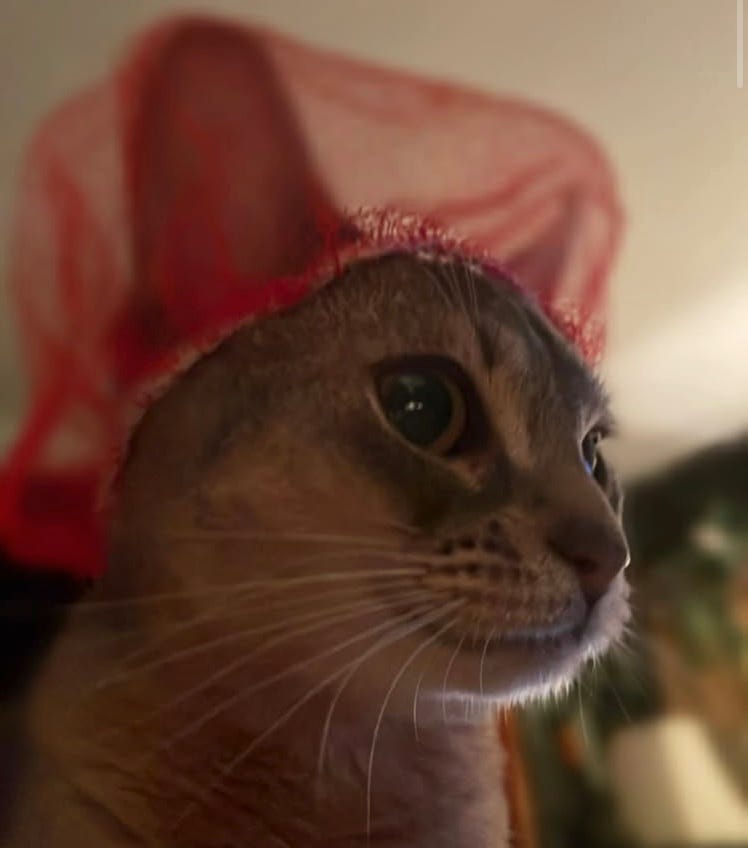
I said, “That’s the beauty of fee-based private practice—I have the autonomy to document anything the %$#! I want in my notes!” Right after saying that, I was again imbued with appreciation for the powerful autonomy I now enjoy after being excommunicated from “the system.”
Anyway, I asked Laura to write up a report about Pearl’s case so I could share her newfound amateur veterinarian skills with my readers (I want to emphasize again that I had only given her suggestions of things to read as well as a referral to a vet, so I do not consider that I was Pearl’s “doctor” at all).
Laura and her husband’s account is colorfully and brilliantly written, detailed, and engaging. I have included the original document below, along with the version I wrote, which follows a case report format suitable for an academic veterinary journal. Here is their original version, titled “Miracle Empath Kitten Meets Miracle Mineral Solution.”
🐱 📁 Miracle Empath Kitten: 102KB ∙ PDF file – Download
Title
Clinical Report: A Case of Persistent Feline Calicivirus and Mycoplasma felis Infection in an Abyssinian Kitten and the Use of Chlorine Dioxide (MMS) Therapy
Abstract
We report the clinical course and management of a blue-ticked Abyssinian kitten (“Pearl”) presenting with chronic gastrointestinal, respiratory, and ocular disease following adoption from a multiple-cat household and a recent vaccination for FVRCP. Diagnostic workup established infections with Feline Calicivirus and Mycoplasma felis. Despite conventional therapy, the patient’s symptoms persisted. Off-label use of chlorine dioxide (MMS) was initiated by the parents, along with nutritional support and adjunct therapies. Clinical improvements were observed, including resolution of gastrointestinal symptoms and improved activity. This case highlights the complex interplay between vaccination, pathogen persistence, and adjunctive therapies in feline medicine.
Case Presentation
Pearl, a 4-month-old Abyssinian kitten, was adopted on February 15, 2025, following adoption of her healthy littermate, Clio. Pearl was reportedly unvaccinated; however, records indicated receipt of the FVRCP vaccine (Calicivirus, Rhinotracheitis, Panleukopenia vaccine) on January 3, 2025. She presented with chronic diarrhea, vomiting, respiratory distress, and left ocular membrane prolapse. Physical exam revealed emaciation, rough coat, and mild paresis.
Initial veterinary workup included clinical assessment and empirical treatment with human-grade eye gel and Terramycin ophthalmic ointment. The patient was clinically diagnosed with Feline herpesvirus; however, confirmatory diagnostics were initially withheld for unclear reasons.
Pearl was maintained on her routine diet, but symptoms persisted. PCR panel (performed February 20, 2025, at a referral hospital) was negative for herpesvirus, positive for Feline Calicivirus and Mycoplasma felis. Veterinary consultation discussed the prognosis, potential for chronic viral shedding, and recommended further vaccination and the need for isolation from sibling Clio; however, separation in the household was not feasible.
Therapeutic Intervention
Based on instructions from online resources, a protocol of oral and topical chlorine dioxide (MMS) was instituted. Dosage was titrated from 1 drop in 4 oz of water (1:30 dilution), administered on food kibbles, with gradual escalation to 5–6 drops, accompanied by topical misting. Adjunctive therapies included oral L-lysine, mineral/vitamin supplementation, and feline probiotics.
Clinical Outcome
Within days of initiating MMS and supportive nutrition, Pearl demonstrated improved appetite, resolution of diarrhea and vomiting, normalization of respiratory effort, and increased mobility. No serious adverse effects were reported, save for transient gastrointestinal upset during dosage increases (interpreted as Herxheimer reaction by parents). By ten months, Pearl exhibited vigorous activity and weight gain (7 lbs 10 oz), with persistent ocular sight impairment but otherwise full return to health. Co-housed littermate Clio remained asymptomatic following similar supportive care.
Discussion
This case illustrates the challenges of diagnosing and managing persistent viral infections in feline medicine, noting the potential effects of early vaccination on immune resilience and disease course. Chlorine dioxide (MMS), although not conventionally recommended, was associated with apparent clinical recovery in this case. The role of off-label therapies, immune-nutritional support, and household dynamics in chronic feline viral syndromes warrants further investigation.
Conclusion
Adjunctive use of MMS alongside nutritional and supportive therapies was temporally associated with reversal of chronic gastrointestinal and respiratory symptoms in a persistently infected kitten. Larger studies are required to evaluate efficacy and safety.
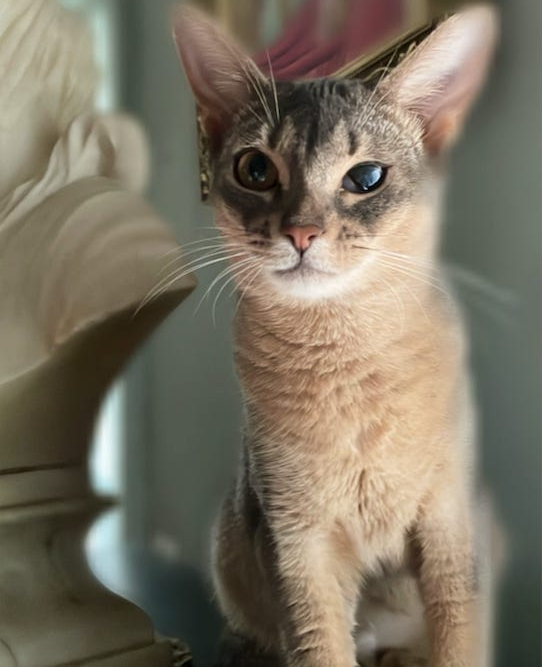
❤️ Beautiful Pearl
Health Issues Mentioned
- Feline Calicivirus
- Mycoplasma felis infection
- Gastrointestinal illness (diarrhea, vomiting)
- Respiratory distress
- Ocular disorder