
Bone Cancer refers to malignant tumors that arise in bone tissue, including both primary bone cancers and secondary (metastatic) bone cancer that spread from other organs. Primary bone cancers originate in the bone itself, whereas metastatic disease reflects dissemination of cancer cells from sites such as the breast, prostate, lung, or kidney. Major primary subtypes include osteosarcoma, chondrosarcoma, and Ewing sarcoma, each with distinct age patterns and biological behavior. The underlying mechanism involves uncontrolled growth of abnormal cells that disrupt normal bone remodeling, invade surrounding tissues, and can weaken the structural integrity of bone. Contributing factors may include inherited cancer predisposition syndromes, prior exposure to ionizing radiation, and certain benign bone conditions that predispose to malignant transformation, though many cases occur without a clearly identifiable cause.
Bone cancer commonly presents with persistent bone pain that may worsen over time and can be accompanied by swelling or a palpable mass near the affected bone. Tenderness and localized warmth may occur, and pain can be aggravated by activity or at night, depending on the tumor’s location and aggressiveness. As the lesion expands, it may reduce range of motion in nearby joints and contribute to functional limitations. Some patients present with an increased tendency for pathologic fractures, meaning fractures that occur with minimal trauma due to weakened bone. Symptoms can vary by subtype and site, with Ewing sarcoma often affecting children and adolescents and sometimes producing systemic features such as fatigue or fever, while chondrosarcoma more often occurs in older adults and may progress more slowly.
The concept of bone malignancy has evolved with advances in pathology, imaging, and molecular genetics, enabling clearer separation of tumor types that previously were grouped together. Osteosarcoma, chondrosarcoma, and Ewing sarcoma have long been recognized as distinct entities based on microscopic appearance and clinical behavior, and modern classification increasingly incorporates genetic and molecular markers. Epidemiologically, primary bone cancers are uncommon compared with cancers that metastasize to bone, so metastatic bone disease is more frequently encountered in clinical practice. Primary tumors show age-related patterns: osteosarcoma and Ewing sarcoma are more common in younger populations, while chondrosarcoma is more prevalent in middle-aged and older adults. Over time, improved diagnostic imaging and biopsy techniques have refined staging and helped distinguish primary from metastatic involvement.
Biologically, bone is a dynamic tissue shaped by coordinated activity of osteoblasts, osteoclasts, and the bone marrow microenvironment, and malignant cells can disrupt this balance. Tumors may be described by histologic subtype, anatomic location (such as long bones, pelvis, or spine), and stage, which reflects local extension and spread to distant sites. Imaging findings often include bone destruction, bone-forming changes, or mixed lytic–sclerotic patterns depending on the tumor type, while biopsy confirms the diagnosis by evaluating cellular morphology and, in some cases, molecular characteristics. Metastatic bone cancer typically reflects osteolytic or osteoblastic activity driven by interactions between tumor cells and the bone niche, leading to pain, structural compromise, and altered bone remodeling. In classification systems, these distinctions are important because they correlate with prognosis and patterns of spread, even though the exact course varies among individuals.
Note: This description was generated by AI and may contain inaccurate information.
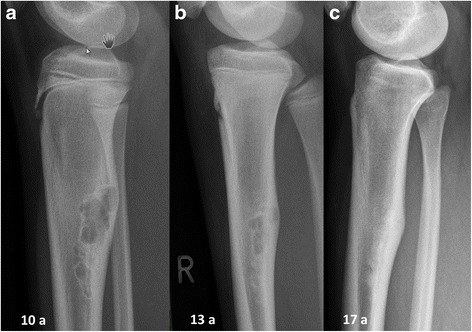
Original Image Producer: Herget et Al.. Credit: https://bmcmusculoskeletdisord.biomedcentral.com/articles/10.1186/s12891-016-1004-0. License: CC BY 4.0. Link to Source: https://commons.wikimedia.org/wiki/File:Fibroma_non_ossificante-RX.jpg .
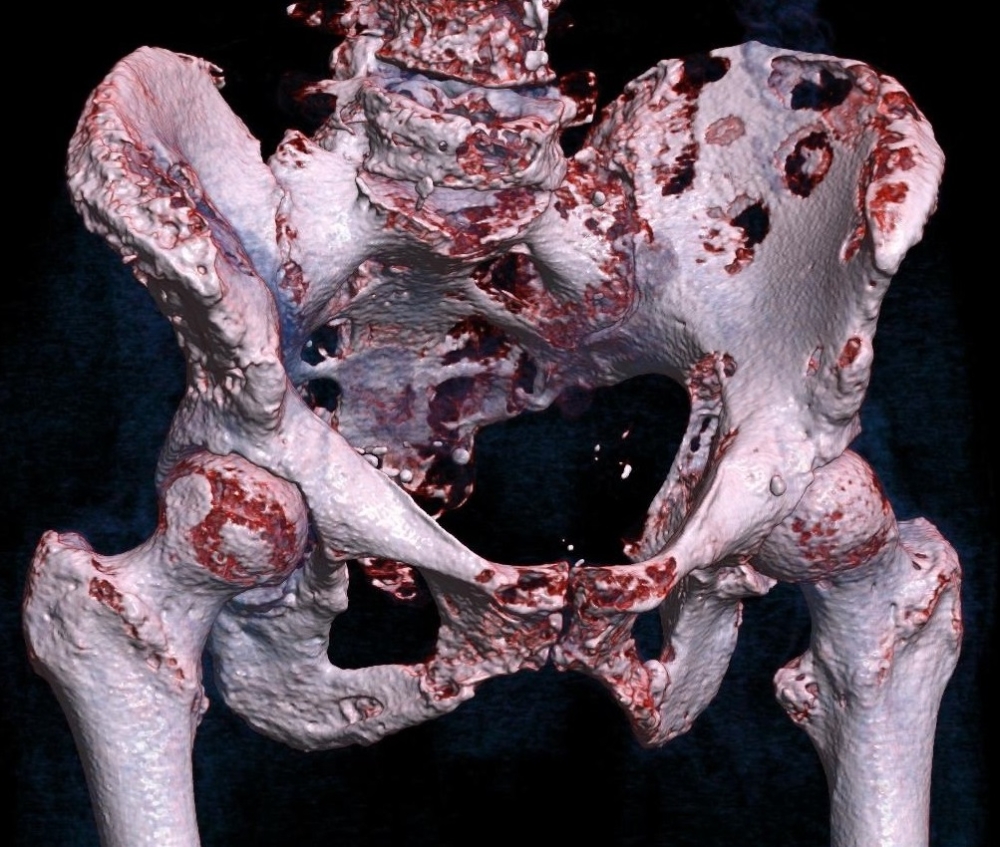
Original Image Producer: Mikael Häggström. Credit: Own work. License: CC0. Link to Source: https://commons.wikimedia.org/wiki/File:3D_rendered_CT_of_hip_bone_metastases.jpg .
Miracle - Have cured 3 dogs
started using MMS this year personally (health maintenance, etc)
Have cured 3 dogs (all terminal), first had lymphoma was hours away from death, 1 drop of MMS revived her ( a miracle), second dog had lung cancer, cured her…. third dog had liver failure…. cured her…
also recommended MMS to a friend with fibromyalgia, he was disabled, no longer… he is now better and healthy
Thank God for MMS
CDS reduces pain and improves symptoms compared to MMS in bone infection an
Q. So you are saying the you personally have found that CDS is superior? Or works as well with no reactions?
A. Yes it is definitely proven to be superior to MMS in my own case. I’ve been taking MMS for over three years three times per day, every day in an effort to cope with a bone infection.
In my own trials, I’ve found CDS to be much more effective than the MMS in terms of keeping the effects of my infection in check. For example… When taking 15-18 drops, 3 x per day, I’d begin having pains again the mornings. However, when I take 5ml of CDS 3 x per day, I wake-up without any pain whatsoever. – Furthermore, I have had several instances where I did not take my CDS(while out on the road) and I remained pain free for most of the day. And so I’d say that the CDS has proven to be far more effective than the MMS in this particular case.
Q. Or works as well with no reactions?
A. When I began experimenting with CDS, I have taken as much as 15ml without any signs of nausea, diarrhea or malaise whatsoever. Whereas the MMS(on the other hand) has proven to run on a very sensitive line. For example… my maximum tolerance has always been roughly 21 drops. However, in the event that I would accidentally miss my juice/water to MMS ration, I would certainly throw it up.
Additionally, taking MMS can alter your ph. Specifically your urinary tract ph. Which may or may not be a problem for most people on the short term, but for those of us who need to take MMS on the long term, or are susceptible to certain types of stone(kidney) then this could be a bad thing. And so again, I’ve found that CDS does not affect ph as the MMS would.
PS. my wife recently got pretty sick with a cough which fell into her lungs. And so we decided to try a protocol 1000(slow sipping throughout the day) to see if it would help and she was able to tolerate 20 ml’s(or 60 drops of MMS) of CDS in a 1L solution without any nausea or effects. – And the the results were nothing short of astounding. Within 12 hours her cough had loosened-up and she was feeling much better. – This is far better than she’s been getting with antibiotic inhalers throughout her history with bronchial asthma and so I think CDS has proven itself there also.
So in short, I’d say, I’m a believer.
Hope this helps.
JohnB
Swelling in sternum reduced after MMS use
hello I’m here, I have almost a month and a half taking mms, and if it is working, incredibly in the sternum had a swelling the oncologist had told me was bone, and pear my surprise, one night I began to feel a few pecks at electric Within days after the formation deishicieron he had, incredible ¡¡¡¡,
know I have a long way to go, I would like to travel to India but economically I do not think I can afford it, I would like to know how much it cost and treatment best?
but I’m struggling with what I can, my mms droplets, and friends who give me lots of love and are so convinced as I am in my recovery.
I love life, love what I’m learning and I love every soul to me dadicado few minutes of your attention
MMS use associated with lumps and reflux in cancer patient
I have been taking MMS for 3 weeks & am now up to 14 drops twice a day. I was told I have bone cancer mets a year ago. MMS side effects have included sneezing, vomiting & diarrhea (which have now stopped), several hard pea-size lumps on the trunk of my body. And, a lot of reflux. I am not undergoing any other treatments, vitamins or supplements.
I would be interested to hear how other people with cancer are doing on the MMS. I also have lymphodema in my arm, which is huge compared to the other arm. My daughter tells me I look like ‘Hellboy’!! Does anyone else have this awful swelling & found the MMS has helped?
Best regards to you all.
Linda
Queensland
Woman recovers mobility after using MMS supplement
The case of the lady that lay in bed unable to move for 8 years.
This is May 1, 2008. About one month ago there was a knock at the door here at my friends place in Mexico and in walked a very pretty Mexican lady. She was carrying a large envelop which I recognized as such an envelop that would have x-rays and other records. And that was exactly what was in the envelop. She said that she wanted us to see that she had evidence to back up the story that she was about to tell us.
There were quite a few x-rays of her back and legs and other bones. These x-ray showed the evidence why she was unable to walk and move to any extent for 8 years. In the year 2000 she had been 47 years old, now she was 55 and very happy.
She said that in the year 2000 she began to get back pains and leg pains. The doctor said it was rheumatoid arthritis. Her pains continued to get worse and finally she had to take to her bed during the year 2000. It continued to get more painful to move and the muscles drew up so that she couldn’t move much anyway.
Her hands started to resemble birds claws and she could not use them. Her eyes dried up requiring someone to drop tears into her eyes on a continuing basis, and her mouth went dry so that she also need continuous water for her mouth. She told us that she no longer wanted to live. The pain and constant need for help was more than she could stand. She wished for death.
Then only one month before she came to see us, someone took a bottle of MMS to her and suggested that she take some according to the instructions on the label which was to start at one drop and increase one drop each dose if possible. Well, she worked up to 7 drops only, but in one month she was back on her feet, walking normally, and when she walked into our house here no one would have imagined that she had been in bed for 8 years.
She looked very good. She was taking 7 drop doses twice a day, and she told me she intended to continue right on up to 15 drops twice a day. She shook my hand and gave me a big hug. She said that we could have her records but we didn’t have a place for them. She said that she would keep them and that if anyone ever wanted to ask her about her experience she would be happy to show them.
She left walking normally without even a limp. The only thing left was that she still needed to put artificial tears in her eyes from time to time. She had been a law student in 2000 and she wanted to return to her studies.
So do you see why I called the MMS a Miracle Mineral?
MMS - personal stories
My son (35 y.o.) has suffered with debilitating prostatitis for 15 years, and since taking MMS (as per protocol) for 10 days has declared himself cured! He has been on the strongest antibiotics for most of that time, which of course has had lots of side effects.
His daughter (3 y.o.) developed a severe throat infection and he said ‘it’s one thing to take MMS yourself, but another thing to give it to a child’. However, after careful consideration he and his wife decided to give it to her. She took 1 drop, 2 drops, 3 drops and after the 4 drop dose on day 2, she started playing and felt fine. Normally such a situation would require antibiotics and bed rest for at least 7 days.
My son’s friend (55 y.o.) has had an elevated PSA count for the last 12 months to the point where prostate cancer surgery was planned. He started taking MMS and after 10 days his PSA count had returned to within normal limits. His doctor was so amazed, he said ‘we have never seen this happen before’ and demanded to know what he had been taking. He also suffers with an hereditary cancerous bowel condition, requiring very regular colonoscopies for diathermy of cancerous polyps. He had a colonoscopy after 2 weeks of MMS and the doctor declared his bowel to be ‘clean’ and not needing to see him again for 2 years.
My partner has metastatic melanoma Stage IV with secondaries in lungs, liver, bones, chest wall and groin lymph nodes and began on MMS about 4 weeks ago. So far no discernable improvement, but we are ever hopeful and I will report his results as time goes on. We understand there is no simple test to undertake to determine if the MMS is actually working on him or not, but he says, ‘where there’s life there’s hope’.
I would encourage everyone on these forums to keep posting their findings. And I say, What a miracle!!!!!