
Many sources have reported success in treating animals including cats.
Cat Allergies
I was born with severe allergies to cats. I didn’t even have to see them, but if I walked into a home I would know immediately.
My symptoms:
- tightness in chest
- itchy throat/eyes
- wheezing
In August 2019 I stumbled upon a random podcast where Mark Grenon was a guest and started to dig and research. Eventually I started Protocol 1000.
At 3 weeks I entered a home and after 20 minutes I had a runny nose. A short time later, I noticed there were three cats! My symptoms used to be instantaneous!
I decided to extend the protocol to seven weeks and planned to then go to an adoption center for dogs and CATS.
At seven weeks I walked into the center and entered three different rooms with adult cats, kittens and even cats with HIV. I spent 35 minutes in that room. When I walked out, all I had was a slight sniffle. Pretty amazing.
I continued the protocol for 15 weeks and now do a daily maintenance dose of three drops first thing in the morning, the bath protocol occasionally and carry the spray bottle with me.
August 20th 2021 will be my two year anniversary of using ClO2 for numerous things. No one can argue my results. I will add more testimonies in the appropriate sections.
Thank God, Jim Humble and the Grenons.
Pearl the Cats’ Successful Treatment Using Chlorine Dioxide (MMS)
This is the third report in a growing series of cases successfully treated with chlorine dioxide therapy. The first two were of my own personal illnesses (infectious colitis and paronychial abscess), and this third one is of… a cat named Pearl.
The following case report is co-authored by me and my patient, who has requested anonymity (I will refer to her as Laura).
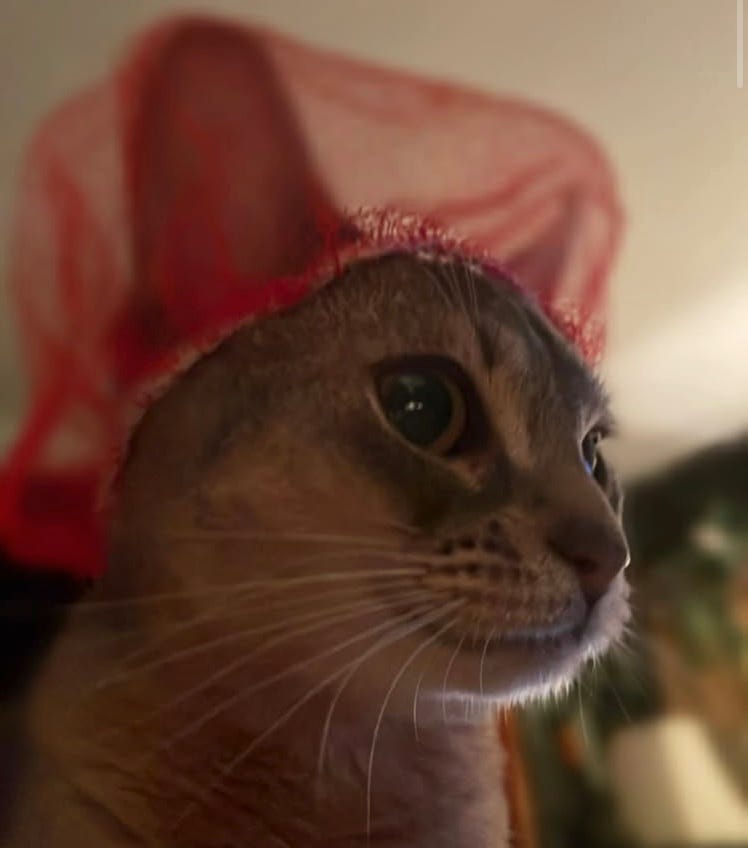
In a recent follow-up visit with Laura, whom I treat for the prevention of recurrence of breast cancer (which she has had 4 separate times), one of the many topics we covered was her glowing update on the condition of her cat Pearl. Meet Pearl:

My History With Pearl: In a prior visit a few months ago, Laura was beset with anxiety and distress over Pearl, an Abyssinian cat that she had recently acquired from a breeder, but who was not thriving. Actually, that is an understatement because Laura reported that Pearl had constant diarrhea, frequent vomiting, troubled breathing, and made wheezing and whistling sounds. She couldn’t even jump on a chair from the floor.
After we had settled on the adjustments to Laura’s treatment plan, I started to think about Pearl and how I could help her. I included a list of educational resources that I thought might be both relevant and impactful in treating Pearl’s mystery illness, as well as a vet who I thought might be willing to provide such expert guidance and care (I learned later that wasn’t true).
Disclaimer: I am not a vet, and it is illegal to practice veterinary medicine as a medical doctor, so know that, beyond the suggestions above, I did not participate in Pearl’s care at all. Problem (or not): Laura and her husband took it upon themselves to self-treat Pearl, based on my “suggestions.”
Fun Fact: I was out to dinner with my daughters and ex-wife a few weeks ago, and I told them the story of Pearl, explaining how, based solely on my providing them with educational resources, Laura and her husband were able to recover her cat.
When I told my ex-wife that I had included the suggestions as an “addendum” to Laura’s visit note in my clinic’s Electronic Medical Record, she burst out laughing uncontrollably. “What? You wrote suggestions for her cat in the medical record? How can you do that?” Note that my ex-wife is also a pulmonary and critical care specialist, working at a major academic medical center. I gathered from her comment that it is still a place where doctors do not offer educational resources to potentially help preserve the health of dying cats when the cat’s illness is the proximate cause of their patients’ severe anxiety.
I said, “That’s the beauty of fee-based private practice—I have the autonomy to document anything the %$#! I want in my notes!” Right after saying that, I was again imbued with appreciation for the powerful autonomy I now enjoy after being excommunicated from “the system.”
Anyway, I asked Laura to write up a report about Pearl’s case so I could share her newfound amateur veterinarian skills with my readers (I want to emphasize again that I had only given her suggestions of things to read as well as a referral to a vet, so I do not consider that I was Pearl’s “doctor” at all).
Laura and her husband’s account is colorfully and brilliantly written, detailed, and engaging. I have included the original document below, along with the version I wrote, which follows a case report format suitable for an academic veterinary journal. Here is their original version, titled “Miracle Empath Kitten Meets Miracle Mineral Solution.”
🐱 📁 Miracle Empath Kitten: 102KB ∙ PDF file – Download
Title
Clinical Report: A Case of Persistent Feline Calicivirus and Mycoplasma felis Infection in an Abyssinian Kitten and the Use of Chlorine Dioxide (MMS) Therapy
Abstract
We report the clinical course and management of a blue-ticked Abyssinian kitten (“Pearl”) presenting with chronic gastrointestinal, respiratory, and ocular disease following adoption from a multiple-cat household and a recent vaccination for FVRCP. Diagnostic workup established infections with Feline Calicivirus and Mycoplasma felis. Despite conventional therapy, the patient’s symptoms persisted. Off-label use of chlorine dioxide (MMS) was initiated by the parents, along with nutritional support and adjunct therapies. Clinical improvements were observed, including resolution of gastrointestinal symptoms and improved activity. This case highlights the complex interplay between vaccination, pathogen persistence, and adjunctive therapies in feline medicine.
Case Presentation
Pearl, a 4-month-old Abyssinian kitten, was adopted on February 15, 2025, following adoption of her healthy littermate, Clio. Pearl was reportedly unvaccinated; however, records indicated receipt of the FVRCP vaccine (Calicivirus, Rhinotracheitis, Panleukopenia vaccine) on January 3, 2025. She presented with chronic diarrhea, vomiting, respiratory distress, and left ocular membrane prolapse. Physical exam revealed emaciation, rough coat, and mild paresis.
Initial veterinary workup included clinical assessment and empirical treatment with human-grade eye gel and Terramycin ophthalmic ointment. The patient was clinically diagnosed with Feline herpesvirus; however, confirmatory diagnostics were initially withheld for unclear reasons.
Pearl was maintained on her routine diet, but symptoms persisted. PCR panel (performed February 20, 2025, at a referral hospital) was negative for herpesvirus, positive for Feline Calicivirus and Mycoplasma felis. Veterinary consultation discussed the prognosis, potential for chronic viral shedding, and recommended further vaccination and the need for isolation from sibling Clio; however, separation in the household was not feasible.
Therapeutic Intervention
Based on instructions from online resources, a protocol of oral and topical chlorine dioxide (MMS) was instituted. Dosage was titrated from 1 drop in 4 oz of water (1:30 dilution), administered on food kibbles, with gradual escalation to 5–6 drops, accompanied by topical misting. Adjunctive therapies included oral L-lysine, mineral/vitamin supplementation, and feline probiotics.
Clinical Outcome
Within days of initiating MMS and supportive nutrition, Pearl demonstrated improved appetite, resolution of diarrhea and vomiting, normalization of respiratory effort, and increased mobility. No serious adverse effects were reported, save for transient gastrointestinal upset during dosage increases (interpreted as Herxheimer reaction by parents). By ten months, Pearl exhibited vigorous activity and weight gain (7 lbs 10 oz), with persistent ocular sight impairment but otherwise full return to health. Co-housed littermate Clio remained asymptomatic following similar supportive care.
Discussion
This case illustrates the challenges of diagnosing and managing persistent viral infections in feline medicine, noting the potential effects of early vaccination on immune resilience and disease course. Chlorine dioxide (MMS), although not conventionally recommended, was associated with apparent clinical recovery in this case. The role of off-label therapies, immune-nutritional support, and household dynamics in chronic feline viral syndromes warrants further investigation.
Conclusion
Adjunctive use of MMS alongside nutritional and supportive therapies was temporally associated with reversal of chronic gastrointestinal and respiratory symptoms in a persistently infected kitten. Larger studies are required to evaluate efficacy and safety.
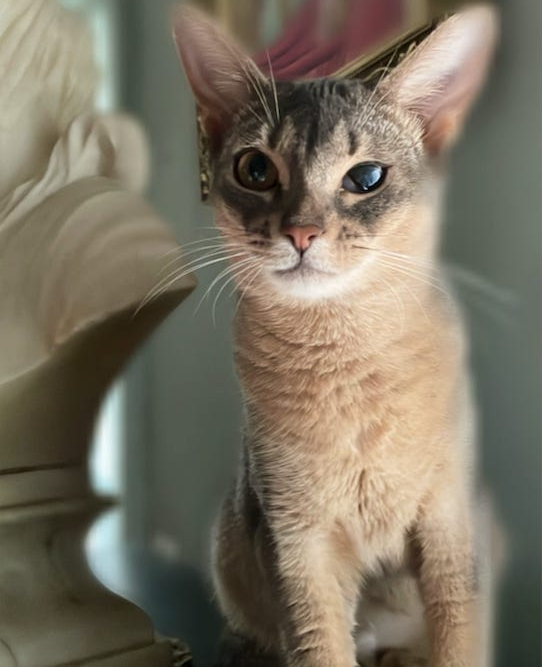
❤️ Beautiful Pearl
Health Issues Mentioned
- Feline Calicivirus
- Mycoplasma felis infection
- Gastrointestinal illness (diarrhea, vomiting)
- Respiratory distress
- Ocular disorder
Dog With Cushing Disease Improves Dramatically
I introduced MMS to a friend to help her dog that was diagnosed with Cushing disease. The dog was 12 years old and had a tennis ball–size tumor on its neck. She couldn’t put his collar on anymore.
Unfortunately, she worked and couldn’t do the protocol in Jim Humble’s book but instead did the protocol for MMS in the dog’s water, see below. She initially did the 5 drops per 5 quarts of filtered water but then doubled the dose.
The dog was lifeless and not doing well and all the dog wanted to do was sleep.
Today the dog is running around, full of energy and the tumor is now the size of a dime.
She then did an experiment with her 5 dogs, whom were all drinking from the same water bowl. She placed MMS in one water bowl and then plain filtered water in the other water bowl and placed them on the ground for the dogs to drink. All the dogs refused the plain filtered water and preferred the MMS water.
Note: Her 5 dogs and our 2 dogs all, at first, refused to drink the MMS water. We just put it down and it can take a day or two but don’t give them any other water or access to any and eventually they drank it.
You can also begin at a lower dose so it’s not as strong of an odor and work your way up over a few days or a week or so.
This same person also had a Great Dane that had a tumor on its head. Drinking the same water, the tumor is completely gone.
Her 5 dogs are extremely healthy now. No more vaccines for her dogs. They all eat a holistic diet of organic meat and some vegetables (like carrots, blueberries, green beans ground up when frozen).
MAINTENANCE PROTOCOL FOR CATS AND DOGS
To determine the number of Sodium Chlorite drops needed for your cat’s or dog’s water bowl. Their stomach’s hydrochloric acid will convert the Sodium Chlorite to chlorine dioxide (aka MMS unactivated).
We added some Celtic salt or Baja Gold salt (which are known for having essential minerals everyone, including dogs, need) to the water bowl.
STEPS FOR ADDING SODIUM CHLORITE DROPS TO A CAT’S AND DOG’S WATER BOWL
- Place Sodium Chlorite drops (Part A) in a glass or ceramic water bowl. DO NOT USE A METAL BOWL.
- Add filtered or distilled water to the water bowl and stir with a plastic spoon.
- Place the water bowl in an ideal location for the cat or dog to drink from. Avoid areas with direct sun which can break down the Sodium Chlorite.
Maintenance dosage:
- 5 drops per 1 quart of filtered water
- 10 drops per 2 quarts of filtered water
- 15 drops per 3 quarts of filtered water
- 20 drops per gallon of filtered water
Dosage used to cure Cushing disease: doubled the above dosage.
Corneal sequestrum
My elderly cat developed corneal sequestrum in one eye. It was uncomfortable for him and scary looking!
I recognized it, having gone through this disease with another cat that was unsuccessfully treated by the vet, and the animal passed.
Quite honestly the only solution offered was an expensive operation to remove it.
This time I had MMS, found a testimonial involving a human eye infection, and made a diluted solution to drop into the cat’s eye daily.
Slowly the eye cleared.
Wonderful product.
Minor Cat Scratch Healed Quickly
I picked up a cat I didn’t know too well and it jumped out of my arms. In the process, I received a minor scratch on my hand. No big deal.
Usually this would take a few days to heal and be a bit tender to the touch. Since I had some CDS around, I sprayed it on there to see what would happen.
I was surprised how quickly it healed. It’s one hour after the event, and the scratch is still visible, but no swelling, tenderness or pain.
BTW, the CDS was full-strength. No burning, nothing. This stuff should be in every first-aid box!
Personal and Animal Health Experience Using MMS
For a few weeks or so now, I have been using MMS.
About a week ago, my mom told me that one of her kittens became paralyzed in his back legs and was shaking. I gave him DMSO with MMS and he is on his way back to good health and mobility.
It also cleared up an infected gum line for myself.
They use this to purify dirty water and make it potable, and chlorine is used in many water supplies. For that reason, I do not believe the concerns surrounding MMS.
I suggest starting with smaller doses initially and always drinking healthy amounts of water.
Lump on her thyroid is almost completely gone
My wife is doing wonderfully with help of MMS.
Her lump on her thyroid is almost completely gone. She has to practically hurt herself digging into her throat to even feel it now.
We’re just about ready to visit our physician for follow up xrays. If the moderator of this thread will let me, I’ll try to post the results of her tests — both baseline and resulting.
Oh! And my friend’s cat, Dublin, with the huge cancer tumors is gaining weight and moving about again. The tumors are slowly going away.
I can’t say this enough, MMS is as it’s named, a miracle!
Oral Infection in Cats eliminated with CD
MMS is amazing for animals I treated 2 stray cats that were very sick and their mouths were infected and they couldn’t eat due to a viral infection. I activated 4/5 drops (in one dose) and give it to the cat with a syringe, and make a little spray bottle with activated MMS to spray their mouths. The recovery took few days and they’re healthy and happy.